Consortium workshop — 30 April 2026·Prepare here
Ure Dales LRS
30 Apr →

The six plans

Six documents that together describe how the Ure Dales Landscape Recovery Scheme will work over twenty years.

By the end of the Ure Dales development phase, the consortium will have produced six plans. Together they set out how the scheme will work, how it will be paid for, and how it will be watched over the twenty years of the Landscape Recovery agreement.

Each plan is a working document. It is written by the consortium of eighteen landowners, Yorkshire Wildlife Trust, and the scheme’s professional advisors. It is reviewed by DEFRA as part of the application for the implementation agreement.

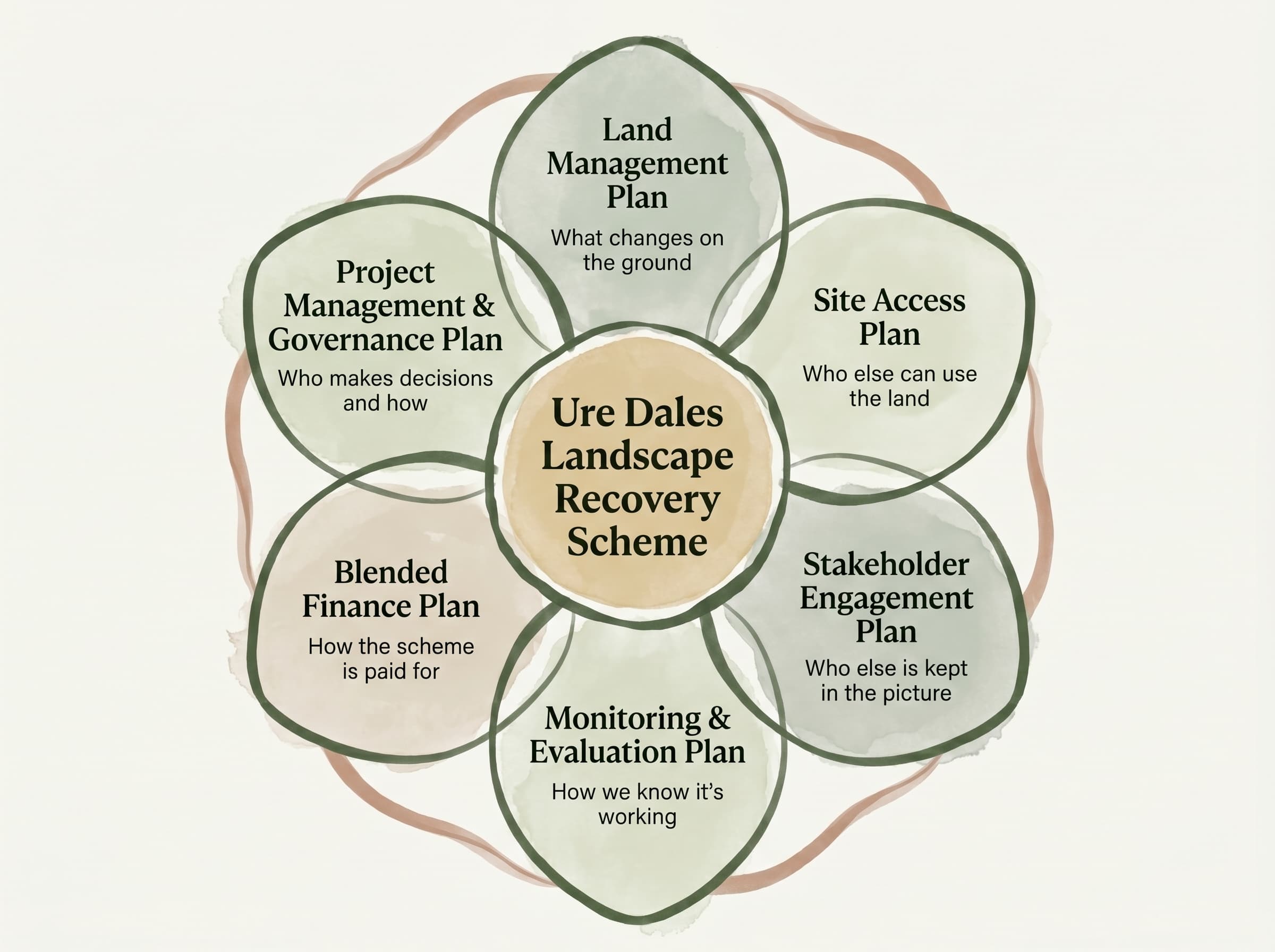
A diagram showing the scheme at the centre, surrounded by six plans: Land Management, Project Management and Governance, Blended Finance, Monitoring and Evaluation, Stakeholder Engagement, and Site Access. Each plan supports the others.

What each plan covers

Land Management Plan

Describes the changes each participating landowner will make on their land — where, when, and how. This is the practical heart of the scheme: what gets planted, what gets left alone, what gets restored, and what keeps producing food and livestock.

Read more →

Project Management and Governance Plan

Sets out who holds which responsibility across the twenty years — how the consortium makes decisions, how money is handled, and how disputes are resolved. This is the plan that the 30 April 2026 workshop will shape.

Read more →

Blended Finance Plan

Sets out how the scheme will raise the money to deliver the other five plans — from DEFRA, from the nature markets, and from other sources. This is where the business model for the scheme lives.

Read more →

Monitoring and Evaluation Plan

Sets out what will be measured, by whom, and how often — so that the consortium, DEFRA, and any buyers of environmental outcomes can see whether the scheme is delivering what it promised.

Read more →

Stakeholder Engagement Plan

Sets out how the scheme will stay connected with neighbours, local communities, tenants, and the wider public over twenty years — not just at the start, and not just through formal consultation.

Read more →

Site Access Plan

Sets out where and how people can enter the scheme area — for walking, research, monitoring, or other legitimate reasons — while respecting the rights and privacy of the landowners whose land hosts the scheme.

Read more →
How the plans fit together

The six plans describe one scheme from six angles. The Land Management Plan says what will change on the ground. The Project Management and Governance Plan says who is responsible for making sure it happens. The Blended Finance Plan says how it will be paid for. The Monitoring and Evaluation Plan says how we will know it is working. The Stakeholder Engagement Plan says who else will be kept in the picture. The Site Access Plan says who else can use the land.

Each plan needs the others to hold up. If the Land Management Plan is ambitious but the Blended Finance Plan can’t raise the money, the scheme fails. If the Monitoring and Evaluation Plan is loose, buyers won’t trust the environmental units and the Blended Finance Plan fails. The six are a linked set.

Source: DEFRA, Landscape Recovery: more information on how the scheme will work.